• Skip to primary navigation
  • Skip to main content
  • Skip to primary sidebar
  • Skip to footer

ArborTech Tree Service

Southlake and Colleyville

  • Services
    • Tree Trimming
    • Stump Grinding
    • Plant Health
    • Tree Removal
    • Tree Planting
  • Testimonials
  • News
  • About
  • Contact
  • Review Us

News

June 14, 2022

Storm Cleanup and Tree Removal: What to Know

As summer storms loom on the horizon, we’re reminded of the damage these storms can do. But did you know that damaged trees can help measure a tornado’s wind speed? 

After a tornado, scientists measure how trees have fallen. Considering the species, age, and health of the trees, the scientists can compile this data and then get an estimated wind speed. 

Severe weather is a threat to trees. But when those trees fall, in whole or in part, they can cause more damage than the storm itself. 

Keep reading if you’re faced with storm cleanup after a severe weather event. We’ll talk about ways to clear your property after a storm and how regular tree maintenance can minimize damage before it happens. 

Preventative Tree Care 

Regularly scheduled tree inspections by a professional arborist should be on every homeowner’s list. An arborist can identify disease and insect infestation and treat these issues before they become a bigger problem. 

Your arborist can also study your trees and determine which direction branches are growing. If branches are headed toward power lines, your roof, or your driveway, they need trimming. Leaving these branches to grow on their own can lead to costly damage, even in the absence of a storm.

You’ll also need to consider Texas tree laws. You can be held liable if any part of your tree falls and injures a person or damages another’s property. You should also be mindful of trees along your property line. 

The experts at Arbor Tech can give you more information about tree laws and let you know if any of your trees might pose a legal problem.

Cutting back wayward branches isn’t just to give your trees a beautiful shape. You can also prevent potential injury and costly damage by keeping your trees trimmed and healthy.  

Storm Cleanup

Texas storms can be vicious, and trees often bear the brunt of the damage. The integrity of power lines during and after a storm is critical.

If one of your trees falls on a power line, call your electric company or 911 right away. Do not attempt to move the tree or touch the power line. 

After the severe weather has passed and power lines are secure, it’s time to call for storm cleanup. Tree clean up service near me can handle the job.

If you’re lucky, you may only need the removal of broken tree branches and clean-up service. But sometimes storms can damage a tree beyond repair. In cases like these, your tree expert must entirely remove the trees. This is when a skilled arborist is necessary for cleanup service. 

If your tree can’t be saved, it will be tied off and cut, so it falls in a safe location. Then the felled tree will be cut into more manageable sections. Lastly, the tree stump needs to be handled.

Tree Removal

Professional arborists should assess your trees if you’re planning tree removal and lot clearing for new construction. Your arborist and your builder can work together to keep existing trees while ensuring they won’t interfere with construction or cause damage in the future. 

Trees add value to your home and property, so it’s in your best interest to save as many trees as possible when you’re building. However, sometimes trees just don’t fit within the scope of your construction plans. 

You’ll also need to consider the impact trees will have on the effectiveness of solar panels. If your trees are blocking the sunlight, they’ll need removal. Otherwise, you may not achieve peak performance from your solar setup. 

Sometimes trees need to be removed due to advanced disease or age. Diseased trees can be especially problematic because the infection can quickly spread to other trees. Your tree care expert can assess the situation and let you know if removal is the solution. 

In some cases, tree removal requires a permit. There may be exceptions based on the type of tree and the size of the lot, but it’s best to search for tree removal near me. Arbor Tech can help you navigate the permit process to ensure your tree removal goes smoothly. 

Dealing With Tree Stumps  

There are two ways to handle a tree stump. The stump can be cut to ground level, or stump grinding might be the solution. Many tree experts prefer stump grinding because it removes almost all of the tree remnants. 

Be sure that you make your arborist aware of any sprinkler or gas lines running through your yard. The last thing you want after a storm is more damage. 

And if there’s a silver lining to this storm cleanup cloud, it’s that you can turn your downed tree into firewood and the wood chips from the stump into mulch. Your tree may no longer be standing, but you can still make use of it.

After the Storm 

Once the storm cleanup process is finished, you may wonder what to do next. Luckily, the experts at Arbor Tech can help. 

They can help you choose new trees and advise on tree species that are hardy and more resistant to disease and insects. Plus, they will ensure that your new trees are not too close to power lines, your roof, and your solar panels. 

Your yard might not look the same as it did before the storm, but it might look even better with help from Arbor Tech.

Contact the Experts for Storm Cleanup

Texas weather always has the potential to damage trees. Storm cleanup is just a phone call away if this happens to you. 

Contact the experts at Arbor Tech for tree care you can count on all year long. 

Filed Under: Tree Service Tips

May 25, 2022

Tree Pruning Do’s and Don’ts

Tree Trimming vs Tree Pruning

Why is tree pruning essential for yard maintenance? Pruning is important for trees because it removes diseased or dead branches, improves the structural integrity of the tree, and can even encourage new growth in your tree. 

However, pruning your tree incorrectly can cause many problems with your tree and may even kill your tree over time. If you are ready to tackle your tree pruning project, it is essential that you learn the proper methods. 

Do you want to learn more about the do’s and don’ts of pruning a tree? Keep reading this guide for everything you should do and everything you should avoid with tree pruning. 

Important Tree Pruning Tips

There are many things that you need to do to have a healthy, well-structured tree. While it may be best to hire a professional tree pruning service, there are many things that you can do yourself to prune your tree. 

Here are some of the most important things you should do when pruning your trees!

Do Use the Right Tools

One of the most important tips to follow when you are trimming your trees is to use the right tree pruning tools. You need to have a sharp pruner or saw that is able to make clean cuts on your tree. 

You may also need different sizes of pruning tools. These include hand shears, lopper shears, and even pole pruners. 

You also need to invest in the right safety gear to protect yourself. You may have falling branches and other dangers, so protective gear will prevent unnecessary injuries. These include thick work gloves, safety goggles, and a hard hat. 

Do Remove Weak or Unproductive Growth

Next, you must remove any growth that is weak or unproductive. This includes growth that is diseased or dying, as these can spread to other areas of your tree. 

You should also remove things known as suckers, which are vertical growths that come from the base of the tree. 

Do Cut in the Right Places

Learning to cut your tree in the right places is the key to good pruning. If you trim wherever you want to, you may not be able to shape the tree. A good rule of thumb to follow is to always cut back a branch or twig that is pointed in the direction in which you want your tree to grow in the future. 

This way, you will have healthy and controlled growth on your trees in the future. 

You also need to avoid cutting the branches too close to the tree trunk. If you do this, you can make it easier for diseases and pests to damage your tree trunk and kill the tree. Instead, make the cuts faster away from the trunk while avoiding leaving a stub. 

If you are ever unsure of whether or not you should cut a branch, you should wait! You can always cut a branch later, but you can never bring back a branch that you already cut. 

Do Consult a Trained Arborist

Finally, you should consider consulting a trained arborist to help you with your tree pruning service. While pruning your own trees may be able to save you a bit of money, an arborist is a worthwhile investment. 

They will properly prune your trees and will ensure that they grow properly for years to come!

Tree Pruning Tips to Avoid

While there are many things that you can do to improve your tree growth, there are other mistakes that you can make which can impact your tree health. 

Learning more about these mistakes will make it easier to avoid them when you are pruning trees. Here are some of the top things to avoid when pruning a tree. 

Don’t Prune Without a Good Reason

One of the first rules to follow when pruning is to never prune without a good reason. If you don’t have a real reason to prune your trees, it increases the chance that you could make a mistake. 

Only prune when you are trying to improve the structure of your tree, removing dead or broken branches, or removing branches that are dangerous or obstruct a walkway. 

Don’t Remove Too Much Foliage

Next, you should avoid removing too much foliage when you are pruning during a growing season. Typically, you should remove 25% or less of the foliage on your tree. 

If you prune your trees too much, it can cause a lot of stress for your tree. Over pruning may even cause your tree to die. 

Don’t Prune in Dangerous Situations

You should also never take on jobs that can be dangerous or are potential safety hazards. There are some pruning jobs that require a certified arborist if they are to be done correctly and safely. 

For example, you should not try to do a pruning job that requires you to use a chain saw or climb up a ladder. You should also never climb the tree with climbing spikes when you are pruning. 

Finally, you should never prune within 10 feet of a utility conductor. Instead, you can hire a professional to do this safely. 

Don’t Prune a Newly Planted Tree

Finally, you should not prune a newly planted tree during its first year of growth. 

The only exception to this rule is if you are removing dead or broken branches from your tree. You should never prune a new tree to promote growth or to change the shape or structure of the tree. 

Instead, you should only prune your trees after they have been planted for two or three years. This will allow your tree to recover from the stress of being planted. 

Need Help With a Tree Pruning Service? 

Tree pruning is an essential part of tree maintenance that will help your trees grow correctly and improve their health. However, the wrong types of pruning can cause worse problems for your tree. By following each of these do’s and don’ts when pruning, you can protect your trees!

Do you need help pruning fruit trees or other trees in your yard? Arbor-Tech Tree Service can help! We provide tree trimming, tree removal, and more. 

Contact us today to learn more about our services or to get a quote for pruning a tree!

Filed Under: Tree Trimming

April 28, 2022

What Is the Difference Between Tree Trimming and Pruning?

Did you know that the average temperature in cities can be up to ten degrees warmer than the area surrounding them? In our hot Texas summers, that figure is no joke—which is where your backyard trees come in.

Trees can help keep our homes cooler in the worst of the scorching heat, but that’s only true as long as we take steps to ensure their survival! It may sound counterintuitive, but cutting back branches with tree trimming and pruning can actually help our trees in the long term.

Of course, these two terms are often confused, especially because they refer to such similar practices. However, it’s worth noting that the main purposes of trimming and pruning are completely different, and there are also a few nuanced distinctions to keep in mind. Here’s what you should know about these common tree services.

What Is the Main Purpose of Tree Trimming and Pruning?

Before we get into a few in-depth differences, let’s clear the air on the main distinctions between tree trimming and pruning.

The purpose of tree trimming is to improve the overall appearance of a tree or shrub. Trimming may be necessary when you want to create an even and pleasing shape in your yard, or when you’re cutting a precise design into an ornamental tree. In addition, trimming can be helpful when you need to cut back overgrown branches that are too close to your windows, roof, power lines, or other essential structures.

The purpose of tree pruning, on the other hand, is to ensure the health of the tree itself. Instead of focusing on aesthetics, pruning can help promote stronger growth in the future, or it can remove dead, dying, or diseased branches that might affect the longevity of the tree. In addition, pruning can take care of branches whose placement might affect the tree’s health, such as by thinning out overgrown branches to ensure that the tree is getting enough sunlight.

What Kinds of Tools Are Necessary?

Trimming trees and shrubs is often easy, depending on their size. All you’ll need, in most cases, are simple tools like trimmers or loppers. These tools allow you to cut off smaller twigs and branches, though you may need a hand saw for larger trees.

When pruning trees, you can often use the same tools you’d use with tree trimming, especially if you’re only doing light pruning. However, pole pruners and chainsaws can also be helpful if you’re working on a larger tree.

How Often Do You Need to Trim or Prune Your Trees?

The frequency of tree trimming and pruning will vary based on the species and maturity of your tree. However, there are a few basic recommendations that you’ll need to follow in most cases.

We often recommend trimming your trees around twice a year, with one session occurring after the trees have blossomed in the spring.

When pruning, we recommend pruning once a year based on your tree’s flowering cycle. For most trees, the best time to prune is in late winter, after the risk of below-freezing temperatures has passed.

Who Should Trim or Prune Trees?

If you have the equipment for trimming or pruning at home, can you tackle the job on your own? The answer will depend on the type of job and the tree in question.

Trimming Trees

If you’re trimming for aesthetic purposes only, tree trimming is a fun task you can do on your own for smaller, more manageable trees. This practice is easy enough for most homeowners to try, provided you have the time, energy, and attention to detail! However, it’s worth noting that trimming too much of the tree—or trimming the wrong vital branches—can affect the overall health of the plant.

For larger trees, or for cases in which you’re trimming a wildly overgrown tree, this practice can be more of a hazard for non-specialists. You should always get expert help when trimming large or dangling branches, or branches too close to your home or power lines.

Pruning Trees

When it comes to pruning a tree, it’s often best to leave the job to an expert.

It’s true that pruning smaller trees is something homeowners may be able to do at home, especially gardeners who make a hobby of working with ornamental trees or fruit trees.

However, it’s a good idea to assess the need for a professional arborist before you pull out your pruning shears, especially for larger trees.

It can be difficult for homeowners to spot the natural growth patterns of their trees and to make the right choices for the long-term stability of the tree. In addition, it’s important to keep the risk to your health and property in mind. Falling tree limbs can cause injury if you aren’t careful, and the wrong cut might send a limb down onto your property or your neighbor’s property by accident!

Having a tree expert tackle this task on your behalf ensures that pruning will focus on the tree’s future health.

Let Our Team Take Care of Your Tree

Both tree trimming and pruning are crucial ways to take care of your tree, but it’s important to understand how each task works. Whether you’re trimming back twigs on a smaller tree or lopping off the branches of a mature one, each cut plays a significant role in the overall health of the plant.

To make sure that each cut is considered with expert care, reach out to our team of experts! We offer tree trimming and pruning services throughout the North Texas area, and we’re happy to take care of any trees on your property. Contact us for a quote today!

Filed Under: Tree Service Tips, Tree Trimming

April 7, 2022

6 Common Warning Signs of Tree Damage From Pests

When you see insects crawling across one of the trees in your yard, you probably don’t give it a second thought. After all, plants and insects have a reciprocal relationship, don’t they?

While this is often true, certain types of insects are greedier than others, and a large enough pest infestation can wreak havoc on your tree’s health. Over time, the tree damage can act like a sickness, making it difficult for your tree to create and transfer the nutrients it needs to survive.

That’s why it’s crucial to keep an eye out for warning signs that the insects on your tree aren’t causing harm. Here are a few things Texas homeowners should look for.

1. Chewed Foliage

One of the most obvious signs that you have a tree infestation is chewed foliage.

Check the leaves of your tree with care for any signs of holes or damage. You might see small, round holes, leaves with jagged edges, or leaves that seem to be chewed through in lines. In some cases, you may only find the “skeletons” of leaves, meaning that the veins are in place, but the middle part between them is gone.

The culprit here could be one of several pests, including beetles, weevils, or insect larvae, depending on the pattern of the damage.

Note that it’s not uncommon to see a few leaves with holes here and there on a well-established tree. This cosmetic damage is often temporary and won’t harm your tree in the long run.

However, when you start to notice that a significant portion of your tree’s leaves have been eaten away, especially when you’re only seeing a single chewing pattern, it’s time to call an expert. This systemic damage can be tricky to treat without help.

2. Damaged Tree Bark

While some tree pests stick to the softer foliage for their diets, others eat away at the protective bark on your tree. Most tree borers, such as termites or certain beetle species, will lay their eggs inside of your tree, allowing the emerging larvae to eat away at your tree as they grow.

Unfortunately, this damage isn’t just cosmetic. Tunneling damage can impact your tree’s vascular system, which can prevent it from pulling essential nutrients from its roots into its leaves and branches. If left untreated, parts of your tree will begin to wither and die over time.

Be on the lookout for signs like bark holes or winding tunnels around the outside of your tree. You may also see something that looks like sawdust or wood shavings collecting around the base of the trunk.

3. Misshapen or Curling Leaves

One common infestation can leave a rather odd sign behind: distorted foliage.

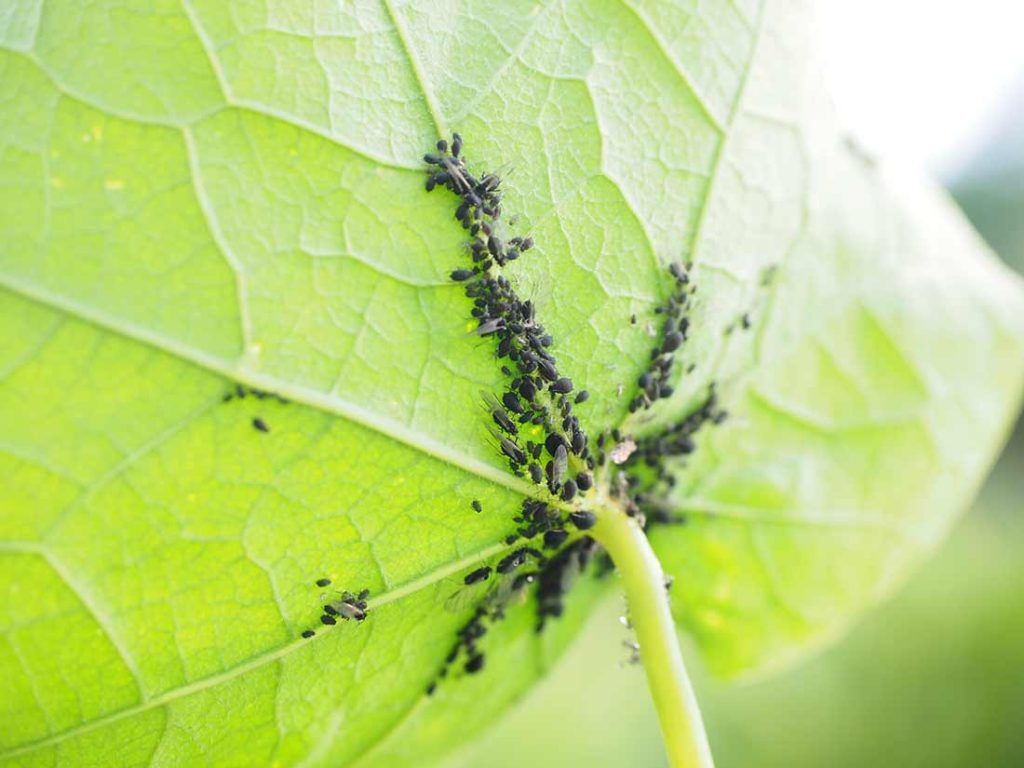
Aphids are tiny pests that are often small enough to go unnoticed, but in large numbers, they can eat away at the sap in your tree’s leaves and stems. This removal drains the substance that helps leaves keep their form, which can cause them to look misshapen, curled, or even yellow.

4. Mold or Mildew

Often, homeowners notice a strange growth on their tree’s bark, leaves, branches, or twigs. Sometimes, this growth may look like mold or mildew, or it may even look like a fungal growth. This worrying type of tree damage may appear white and cottony, black and sooty, or like a patch of grey flecks.

You might be surprised to know that this “mold” is often a colony of insects!

Certain species of aphids can appear white and cottony in color, as can certain types of scale insects. These bugs can be as small as 1/16”, which can make them difficult to see unless they’ve gathered in a group.

In addition, certain insectoid eating habits—like those of aphids—can create a byproduct you may notice on the underside of your leaves or branches. This sticky byproduct, called “honeydew,” isn’t easy to spot on its own—but you’ll often notice the sooty, black mold that tends to collect on it. In some cases, honeydew may promote bacterial growth that can eventually help kill off your aphids, but it’s always better to take care of this problem as soon as possible.

5. Stippled or Faded Foliage

Where aphids suck the sap from your tree’s foliage, other insects often suck the juices from them. This can have a different effect on the leaves: it gives them a stippled, polka-dot look. It can also make their color appear faded or dull from afar. This effect is common when your tree is home to mites or lace bugs.

6. Leaning

A leaning tree trunk can be the result of many different issues, including underground damage or interior decay.

However, in some cases, the culprit may be plant pests, especially in younger trees or trees with a severe infestation. If insects have had a chance to bore away at your tree’s trunk for an extended period of time, your tree may become unstable, making it a dangerous hazard to have in your yard.

What to Do About Tree Damage From Pests

If you’ve noticed any of the signs of damage above, it’s a good idea to do a visual inspection of your tree to see the damage and to see if you recognize any of the common pests in Texas. Equipped with this knowledge, you might be tempted to call an exterminator to get rid of your unwanted tree pests. Not so fast!

Calling an experienced arborist is always the solution when you want to preserve a healthy tree. In some cases, an expert might recommend a few smaller changes before trying to treat the area for pests, such as pruning or soil amendments to help make your tree less vulnerable to the infestation. These small changes can help your tree regain health and better defend itself, whether or not you’ll need additional insecticide.

Contact an Arborist to Save Your Tree

If you’ve noticed any of the signs of insect infestations above, it’s time to act fast. Most of the common pest species here in Texas are fairly small, but they can cause a great deal of tree damage in large enough numbers!

That’s where we come in. Our team of ISA-certified arborists specializes in high-quality tree service, including pest removal. To learn how we can help, contact us today.

Filed Under: Tree Service Tips

March 30, 2022

5 Signs That You Have a Dying Tree On Your Property

You value the trees on your property. They provide shade for you and your family and help make your landscaping efforts beautiful. 

While fully-grown trees are very robust and resilient, diseases and certain environmental conditions can threaten their health. Sometimes, spotting these signs of sickness is easy, but other symptoms aren’t as obvious.

It’s imperative that you learn to recognize the signs of a dying tree, as its falling branches can pose a safety hazard to you and your property. These branches can seriously injure a person or cause a significant amount of property damage.

These are the top five signs that your tree is dying.

1. Cracks In The Bark

If you notice that the bark on your tree is cracking and has started sloughing off the tree, it’s a sure sign your tree is dying. Of all the signs of a distressed tree, this one is probably the most obvious.

It starts with the bark deteriorating. It’ll become brittle and slightly discolored before falling off the trunk.

Over time, cracks will appear in the bark that remains on the tree. Some of these cracks can even penetrate deep inside the tree, reaching its internal cavities.

Cracks in the bark can also lead to danger. A cracked tree trunk is not as sturdy as a healthy trunk, so the tree may pose a safety hazard in the event of a storm or strong winds.

2. Abundance Of Deadwood

Perfectly healthy trees may have some dead spots, which can easily be pruned away to allow for new growth. However, if you notice an excessive amount of dead branches, your tree may be dying.

Deadwood poses a serious safety hazard. These dead branches can fall from the tree at any time, causing injuries to people and pets and damage to property.

Deadwood is relatively easy to spot on your own, but you may need a professional’s help to diagnose its cause and recommend a course of action. 

3. Dead Leaves

A healthy deciduous tree sports bright green leaves during the growing season. If your tree’s leaves are still brown long after winter has passed and other trees in the area have grown lush, vibrant leaves, your tree is probably in trouble. 

You’ll also notice peculiarities in autumn. These dead leaves won’t change color and fall to the ground. Instead, they stay on the branch.

With coniferous trees like pine trees, you’ll notice spots of red and orange needles. 

A tree’s foliage is an important part of its ecosystem and signs of dying leaves or needles are an indication that your tree is distressed.

4. Damage To The Roots

Most trees have an elaborate root system that extends deep underground. They allow the tree to feed and thrive, so any damage to a tree’s roots could prove devastating.

Of course, root damage won’t just crop up overnight. If you’ve recently performed landscape work on your property, there’s a possibility that some machinery may have damaged your tree’s roots. Soil issues and lack of nutrients in the environment can also contribute to root damage.

Root damage may be difficult to assess, given that roots are usually out of view. However, if a tree is suffering from serious damage to its root system, roots can actually break through the soil and come into view above ground. 

Other signs of root damage include yellowing and thinning leaves, lack of new growth, and dead branches.

5. Fungal Or Pest Infestations

Infestations, whether it’s from pests like ants and beetles or a fungus, are a sure sign your tree is sick. Healthy trees aren’t attractive hosts for these sorts of parasites and are typically able to ward off infestations.

On the other hand, a dying tree is a perfect host for pests like carpenter ants, bark beetles, and various forms of fungus. An affected tree has deep recesses that they can settle into and it’s easy for certain insects to carve out a home in the tree’s softened wood.

Spotting a fungal infection may be difficult in the initial stages, so look for an abundance of ants and beetles and stay vigilant while searching for signs of fungus. 

The infestation will become more apparent as it develops. Oftentimes, you’ll be able to see mushrooms sprouting at the base of the tree. Another sign is the development of “cankers” on the trunk. These are weakened areas of decaying bark.

Can You Save A Dying Tree?

Fortunately, it’s possible to save a diseased tree if you notice the issues and take action immediately. You may need to enlist the help of an arborist to diagnose the problem.

Moisture is the most likely cause of an unhealthy tree. If the area around the tree has poor drainage, issues are likely to occur. You may need to alter your landscaping to allow for better drainage.

Another problem that can affect tree health is an abundance of mulch at its base. In the proper amount, mulch can help a tree’s roots retain water and keep the soil cool.

However, too much mulch can suffocate the root system and lead to the development of fungus. Clear away some mulch if you notice issues with your tree’s roots or spot fungal growth.

Finally, pruning away dead areas can save your tree. However, you’ll have to be careful, as certain trees require more precise tree trimming methods. You’ll need to sterilize your cutting tools and research proper pruning practices before you begin. 

In fact, it’s best to let a tree care professional assist you with pruning your distressed tree. Pruning too much could kill the tree.

Arbor Tech Tree Service Can Help

A dying tree can pose a problem for you and your family. Its limbs can fall at any time, resulting in injury and property damage. 

Look out for the signs of a distressed tree. If you notice decaying spots, cracking bark, or dead leaves, your tree may be in trouble. 

Fortunately, professional tree services can help save your tree’s life. Reach out to Arbor Tech Tree Service to see how they can help you.

Filed Under: Tree Service Tips

  • « Go to Previous Page
  • Page 1
  • Interim pages omitted …
  • Page 7
  • Page 8
  • Page 9
  • Page 10
  • Page 11
  • Interim pages omitted …
  • Page 15
  • Go to Next Page »

Primary Sidebar

Call Today!

214-445-8319

Contact Us

Please complete the information below.

  • Hidden
  • This field is for validation purposes and should be left unchanged.

Footer

ArborTech Tree Service

Tree Services

  • Tree Trimming
  • Stump Grinding
  • Tree Removal
  • Tree Planting
  • Plant Health

Service Areas

  • Southlake
  • Colleyville
  • Frisco
  • Grapevine
  • The Colony
  • Rockwall
  • Plano
  • Richardson
  • Allen

Recent News

Crown Cleaning vs Crown Raising When Managing Tall Tree Obstructions

The Toxic Reality of Treating Deep Subsurface Root Systems with Chemical Rot Solvents

Arbor Tech Tree Service

214-445-8319 Contact Us

Check out Arbor-Tech Tree Service on Yelp

Copyright © 2026 · Arbor-Tech Tree Service · Web Design by Key Element Media